

Enable Intelligent Enterprise Operations with Microsoft Fabric
Simplify enterprise operations, accelerate decision-making, and build AI-ready business experiences through a connected Microsoft ecosystem.

OptiSol, now recognized as a Digital & App Innovation (Azure) Solutions Partner for Microsoft
A milestone that reflects our expertise in delivering enterprise-grade application modernization, Azure-native development, and AI-powered digital solutions.
Optisol
+
Fabric
What we deliver on Microsoft Fabric
Enable enterprises to modernize, unify, and scale analytics ecosystems on Microsoft Fabric through end-to-end capabilities across strategy, architecture, engineering, governance, and AI enablement.

Strategy & Advisory
Define your Microsoft Fabric strategy by assessing existing enterprise systems and aligning architecture, analytics, governance, and modernization initiatives with business priorities.

Migration & Modernization Engineering
Execute structured migration programs from legacy environments into Microsoft Fabric using intelligent migration workflows covering source analysis, ingestion, transformation, orchestration, deployment, and validation.

Data Architecture & Lakehouse Design
Design scalable and governed enterprise architectures using Lakehouse and medallion approaches within Microsoft Fabric to unify fragmented data landscapes and establish business-ready analytical foundations.

Data Governance, Quality & Compliance
Implement governance frameworks through role-based access controls, lineage tracking, quality validation, audit structures, and Microsoft-native governance practices.

AI & Copilot Enablement
Build AI-ready ecosystems designed for intelligent automation, predictive analytics, enterprise AI use cases, document intelligence, and agent-powered workflows.

Power BI & Self-Service Analytics
Enable governed access to enterprise data through native Power BI integration, allowing business teams to independently explore datasets and generate insights.
From any Enterprise System to a Unified Fabric Ecosystem
Transform fragmented enterprise data into a connected intelligence ecosystem through a structured Microsoft Fabric execution journey.
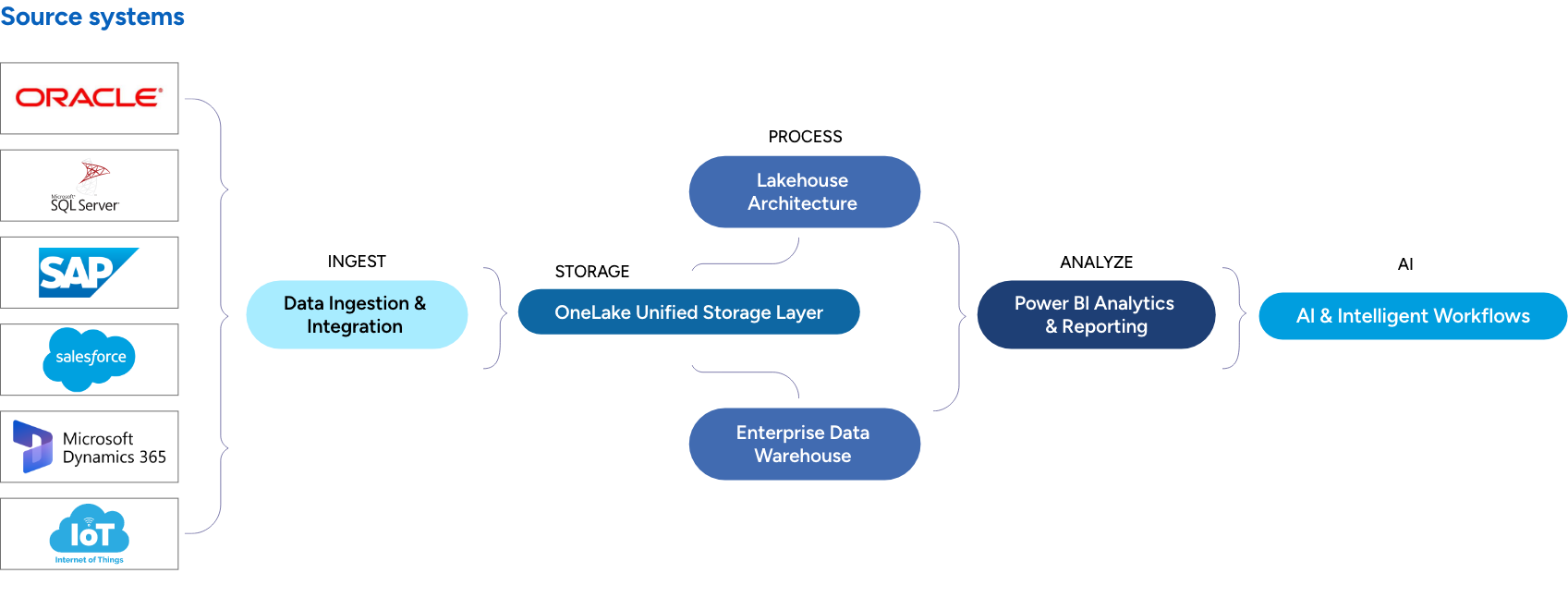

Data Modernization Accelerators for Microsoft Fabric
OptiSol’s iBEAM framework and elsAi combine proprietary AI capabilities with human expertise to accelerate enterprise modernization with speed, control, and accuracy.





Our Microsoft Fabric Experts at the Core of Delivery talent
Enterprise-grade security and compliance
OptiSol operates with enterprise-grade security, governance, and compliance frameworks to support enterprises handling sensitive data and intellectual property - aligning with globally recognized standards for data protection, regulatory compliance, and secure collaboration.




Plan Your Microsoft Fabric Journey with a Structured Enterprise Approach
Frequently Asked Questions
What is Microsoft Fabric and how does it benefit enterprises?
Microsoft Fabric is a unified analytics platform that combines data engineering, data integration, data warehousing, business intelligence, and AI capabilities into a single ecosystem. It helps enterprises simplify data management, improve visibility, accelerate decision-making, and build AI-ready foundations.
Why should organizations choose Microsoft Fabric over traditional data platforms?
Microsoft Fabric brings data, analytics, governance, and AI together within a connected ecosystem, reducing complexity, eliminating data silos, and enabling faster access to trusted business insights.
How does Microsoft Fabric support enterprise data modernization?
Microsoft Fabric enables organizations to modernize legacy data environments through unified storage, scalable analytics, integrated governance, and AI-powered capabilities, helping enterprises transition from fragmented systems to connected intelligence.
Can Microsoft Fabric integrate with existing enterprise systems?
Yes. Microsoft Fabric can connect with ERP systems, CRM platforms, databases, cloud applications, IoT environments, and enterprise software solutions to create a unified analytics ecosystem.
What is Microsoft Fabric implementation and how long does it take?
Microsoft Fabric implementation involves strategy, architecture design, migration, integration, governance setup, analytics enablement, and validation. Timelines vary depending on the complexity of existing systems, data volumes, and business requirements.
How does Microsoft Fabric improve data governance and security?
Microsoft Fabric supports enterprise governance through role-based access controls, data lineage, auditing, security policies, and centralized management capabilities that help organizations maintain trusted and compliant data environments.
Can Microsoft Fabric support AI and Copilot use cases?
Yes. Microsoft Fabric provides AI-ready data foundations that support intelligent automation, predictive analytics, Copilot experiences, agent-based workflows, and advanced enterprise AI initiatives.
How does Microsoft Fabric work with Power BI?
Microsoft Fabric includes native Power BI integration, allowing organizations to create interactive dashboards, self-service analytics experiences, and business reporting directly from trusted enterprise data.
Can organizations migrate from Snowflake, SQL Server, Oracle, or legacy systems to Microsoft Fabric?
Yes. Organizations can migrate data, workloads, and analytics environments from legacy platforms and modern data ecosystems into Microsoft Fabric through structured migration and modernization approaches.
Why partner with a Microsoft Fabric consulting and implementation company?
A Microsoft Fabric consulting and implementation partner helps organizations plan architecture, accelerate migration, establish governance frameworks, reduce implementation risk, and maximize business value from Microsoft Fabric investments.